
Composite vs Wood Decking: Cost, Lifespan, Upkeep
Compare composite and wood decking on installed cost, lifespan, upkeep and heat, then use a simple checklist to choose the right material for your deck.
 Save
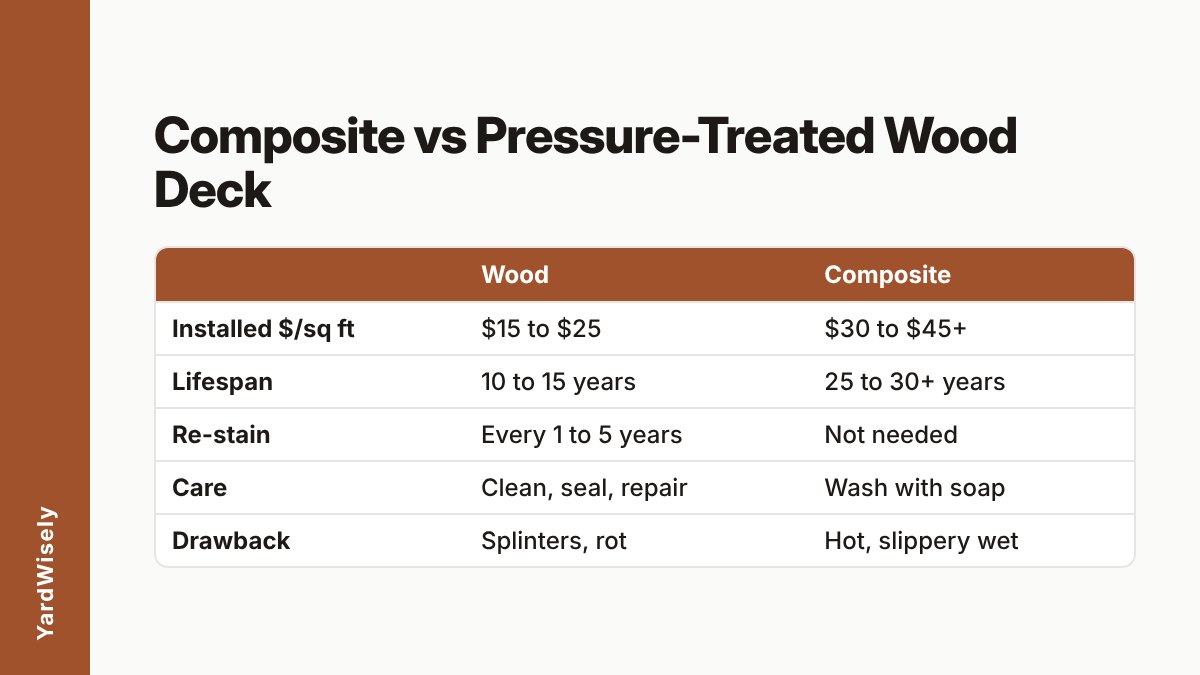
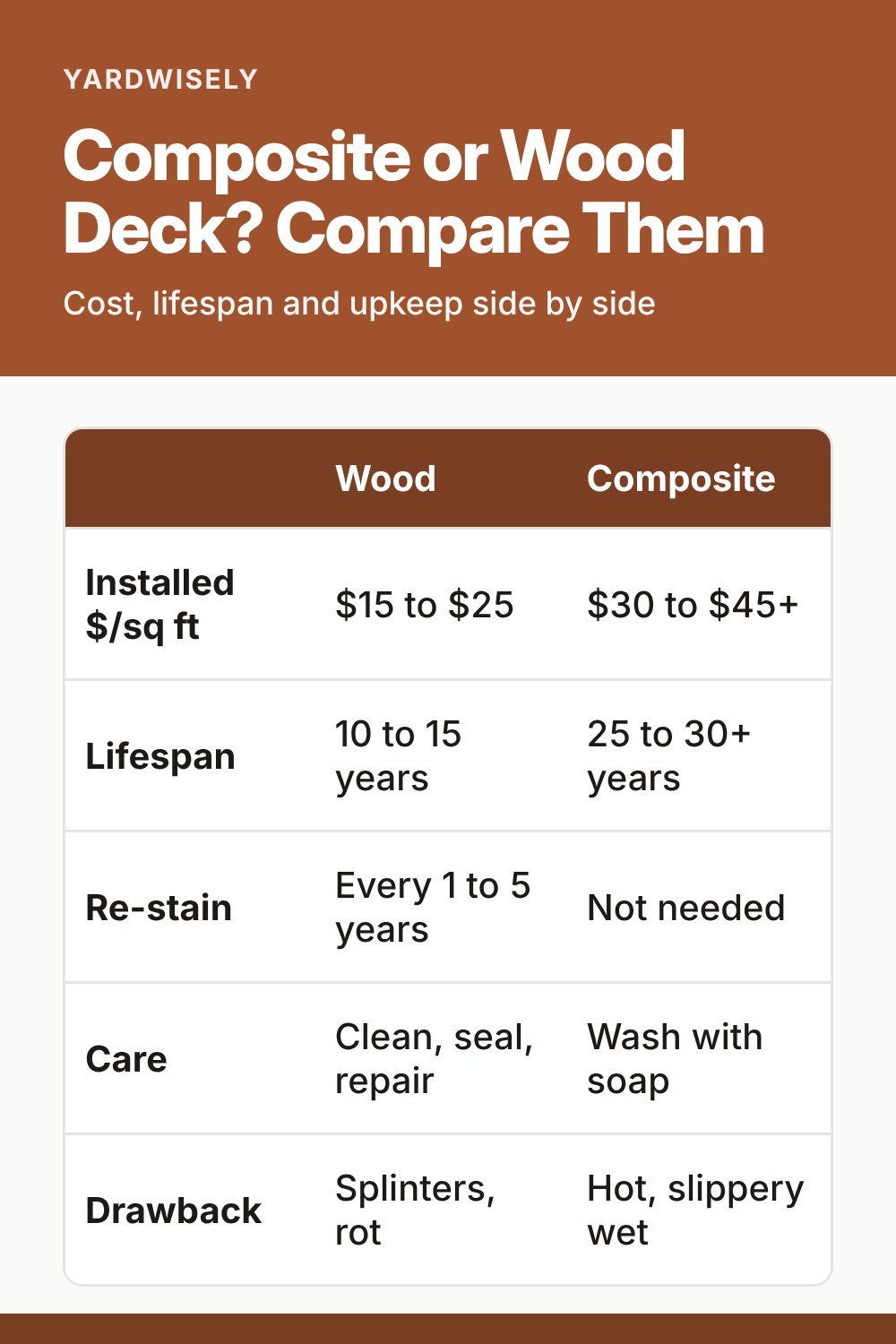
Composite decking costs more to install than pressure-treated wood, but it asks for much less upkeep and typically lasts longer. Wood is cheaper up front, yet it needs regular cleaning, staining or sealing to reach the lifespan people expect. The right choice depends on your budget, how long you will own the home, and how much weekend maintenance you are willing to do.
Quick answer
- Tightest upfront budget: pressure-treated wood.
- Natural look and willing to maintain: cedar or redwood, with regular sealing or staining.
- Least upkeep and longest life: composite, as long as you can afford the higher installed price.
Prices vary a lot by region, board grade and labor rates, and published sources do not agree on exact figures. Treat the ranges below as a starting point, then get written local quotes before you decide.
Composite vs wood at a glance
The table below pulls together ranges stated by two published decking guides. Where a source gave no figure, the cell says so.
| Feature | Pressure-treated wood | Cedar / redwood | Composite |
|---|---|---|---|
| Installed cost per sq ft | About $15 to $25 | No firm figure given; softwoods are often cheaper than hardwoods | About $30 to $45 or more |
| Typical lifespan | 10 to 15 years | 10 to 20 years, 20+ with diligent care | Warranties of 25 to 50 years; 25 to 30+ in practice |
| Re-stain or re-seal | Every 1 to 5 years, depending on the source | Regular sealing or staining | Not required |
| Routine care | Clean, repair splinters and loose fasteners | Clean, seal, stain | Sweep, wash with soap and water |
| Main drawbacks | Splintering, rot, warping | Higher upkeep than hardwoods | Heat in sun, slippery when wet |
One guide lists composite materials alone at roughly $15 to $36 per square foot and labor at about $10 to $14 per square foot for composite versus $15 to $35 for wood. Another lists a much lower material price for pressure-treated boards. The spread is a good reminder that quotes matter more than averages.
What drives the cost
Board price is only part of the bill. Several other items move the total:
- Labor: Installed prices include labor, which varies by region and by deck shape.
- Framing and footings: The structure under the boards is similar for wood and composite, though composite makers may require closer joist spacing. Check the maker’s instructions.
- Fasteners and trim: Hidden clips, fascia boards and railings add to the cost.
- Railings and stairs: These can add a large share of the budget on a raised deck.
- Long-term upkeep: Stain, sealer, cleaner and your time all have a cost. Add them up over 10 to 20 years when comparing.
Lifespan and upkeep in plain terms
Wood. A wood deck can last 20 years or more with regular maintenance, according to one guide. Pressure-treated boards need staining or painting about every 2 to 5 years in one source and every 1 to 3 years in another. Skipping this leads to graying, cracking, splintering and, eventually, rot.
Composite. Composite boards do not need staining, sanding or sealing. Cleaning about twice a year with soapy water and a brush or low-pressure washer is the usual advice. Warranty periods run long, but warranties often cover specific defects such as staining or fading, not everyday wear, so read the terms.
Capped composite. Boards with a protective outer shell tend to hold their look longer than uncapped boards. They cannot be refinished, so cleaning is the only upkeep.
Composite is not maintenance free. Research from the USDA Forest Service notes that field problems with wood-plastic composite decking have included polymer degradation, wood decay and mold, with mold hurting appearance most. Manufacturers have since improved formulations and stress proper care.
How to clean composite and what to avoid
Surface mold, mildew, fading and food stains can usually be cleaned if they are on the surface and not in the board itself. A basic routine looks like this:
- Hose or sweep the deck about once a month to remove dirt and debris.
- Mix a composite deck cleaner with warm water, never stronger than the maker advises.
- Work one small area at a time and keep it damp so the cleaner does not dry on the boards.
- Scrub with a medium-stiff brush, then rinse with a garden hose or low-volume pressure washer.
- Repeat if needed. Test any cleaner or sealer on a small hidden spot first.
Always follow your board maker’s care sheet, since cleaning rules and warranty terms differ between brands.
Heat, grip and comfort
Two complaints come up often with composite. First, boards can get hot in direct sun, especially darker colors. Lighter shades and shade from a pergola, umbrella or nearby tree help. Second, water can sit on the surface and lower traction. Newer textured boards grip better, but take care in rain, frost or ice. Wood can also be slippery when wet or algae-covered, so cleaning matters for both.
Which one fits you?
Run through this checklist:
- Budget now vs later: If the upfront price is the limit, wood wins. If total cost over the years matters more, price out upkeep too.
- Time: Willing to clean and re-stain every few years? Wood works. Want weekends free? Lean composite.
- Look: Real grain suits many homes. Modern composites imitate wood but do not match it exactly.
- Sun exposure: A hot, south-facing deck with bare feet favors wood or a light composite color.
- Plans to sell or stay: Long-term owners get more from lower upkeep.
Before you build: permits and 811
Many places require a building permit for a new deck, especially if it is attached to the house or raised above a set height. Rules differ by city and county, so ask your local building office what applies to your size and height. Also ask about footing depth, railing height and inspections.
Before any digging for footings, contact 811, the free national service that marks approximate locations of buried utilities. Call or submit a request a few business days before you begin, then wait for the lines to be marked.
Common mistakes
- Comparing only board prices and ignoring labor, railings and upkeep.
- Ignoring the board maker’s spacing, gapping and fastening rules for composite.
- Choosing dark composite for a sunny, barefoot-heavy deck.
- Staining wood before it has dried enough to take the finish.
- Skipping local permit checks until after the materials are bought.
When to call a professional
Hire a licensed contractor or engineer for a high or complex deck, an attached deck that needs a ledger connection, or any build where you are unsure about footings, structure or railings. Ask for written quotes that list materials, labor and railings separately so you can compare them fairly.
Sources
 Save
Frequently asked questions
Is composite decking worth the extra cost?
It can be if you want to skip staining and sealing and plan to keep the deck for decades. Sources put composite installed prices well above pressure-treated wood, so compare the upfront gap against years of wood upkeep.
Does composite decking need any maintenance?
Yes, but far less. Expect sweeping and washing with mild soap and water, with no sanding, staining or sealing.
Does composite decking get hot in the sun?
It can, especially dark colors in direct sun. Lighter colors and shade from a pergola or umbrella help.
How long does a wood deck last?
Sources commonly give 10 to 20 years or more, depending on the species and how well you clean, seal and repair it.